What Is GPU Rental? Types and How to Use Cloud GPUs
As GPU prices surge, GPU rental (Cloud GPU) services have emerged as an alternative. Here's how the different types work, what technology powers them, and how to actually use them.
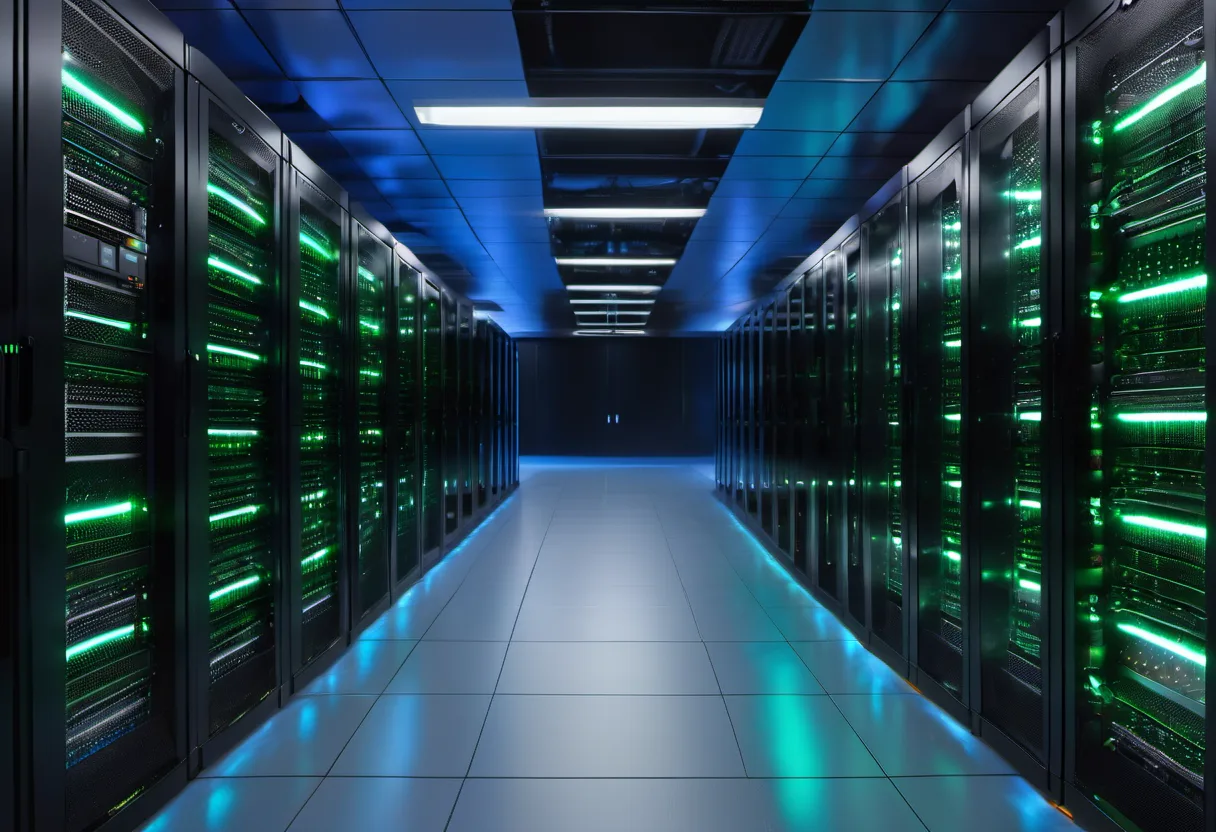
As GPU prices climb sharply again in 2026, GPU rental (Cloud GPU rental) services — where you pay only for the GPU time you actually use instead of buying hardware outright — have emerged as a practical alternative. GPU rental spans everything from hyperscaler clouds to marketplaces that broker individuals’ idle GPUs and blockchain-based decentralized networks, all underpinned by technologies like GPU virtualization and container orchestration.
Why GPU prices have surged
The core driver behind 2026’s GPU price increases is reportedly memory (HBM/GDDR) supply shortage rather than the GPU core itself. As AI data centers’ memory demand has surged, GDDR7, GDDR6, and HBM supply hasn’t kept pace with demand, and market researchers project AI data centers could consume up to 70% of global memory production in 2026 (up sharply from roughly 20~30% in 2022). As a result, the flagship consumer GPU, the RTX 5090, has climbed to $4,929 through its own sales channel, and mid-range GPUs are projected to rise another 10~25% during 2026.
Four types of GPU rental services
Renting GPU time instead of buying hardware breaks down into roughly four categories, depending on who provides it and how.
| Type | Examples | Characteristics |
|---|---|---|
| Hyperscaler cloud | AWS, Google Cloud, Azure | Most stable, integrates with a huge range of adjacent services, but relatively expensive and GPU inventory can be hard to secure |
| Specialized GPU cloud | Lambda, CoreWeave, RunPod | Purpose-built for AI training/inference, flexible pricing (per-second billing, serverless inference), strong for large-scale training infrastructure |
| P2P marketplace | Vast.ai | Brokers idle GPUs from individuals and small operators, cheapest on average but host quality/reliability varies widely |
| Decentralized GPU network | io.net, Akash, Render Network | Pools idle GPUs scattered worldwide via blockchain-based coordination; some analyses put it 60~80% cheaper than hyperscalers |
Specialized GPU clouds tend to fit serious infrastructure needs like training, while marketplaces and decentralized networks tend to fit cost-first experimentation and lightweight workloads.
The core technology behind these services
GPU virtualization: Passthrough, vGPU, and MIG
Renting out a single physical GPU to multiple users at once requires some form of GPU virtualization.
| Approach | How it works | Characteristics |
|---|---|---|
| Passthrough | Assigns one whole GPU to a single virtual machine (VM) | Near-zero overhead gives the best performance, but the GPU can’t be shared with anyone else even when idle, wasting capacity |
| vGPU | NVIDIA’s software stack splits one GPU into multiple virtual GPUs | Each VM gets a dedicated driver and memory, but shares the physical engines via time-slicing |
| MIG (Multi-Instance GPU) | Physically partitions the GPU at the hardware level | Each instance gets its own dedicated compute units, memory, and bandwidth — stronger isolation and more predictable performance than vGPU (supported on data-center GPUs like A100, H100, H200, B200) |
Per NVIDIA’s official documentation, MIG works with Docker-style containers, orchestration tools like Kubernetes, and virtualized hypervisor environments alike, and is managed via the nvidia-smi command or the NVIDIA Management Library (NVML) API.
Containers, orchestration, and pay-as-you-go billing
Most specialized GPU clouds run user workloads as Docker containers and use an orchestration tool like Kubernetes to schedule which GPU handles which job. Combined with per-second billing and spot/interruptible instances — which offer idle capacity cheaply until it’s reclaimed for other demand — this lets users pay only for the moments they actually use.
The scheduling layer behind decentralized networks
Decentralized GPU networks like io.net pool idle GPUs from individuals and small operators scattered around the world (reportedly across 55+ countries and 300,000+ GPUs as of 2026) into a single network, with a separate scheduling layer managing uptime and reliability. Akash Network uses a reverse-auction model, where GPU providers compete against each other on price, driving costs down.
How you can actually use this
- LLM fine-tuning and training: rent the latest GPUs like H100 or B200 only for the period training actually requires, controlling cost without buying expensive hardware outright.
- Trying a Local LLM without local hardware: if you want to use a Local LLM or LM Studio but don’t have enough GPU VRAM, you can spin up your environment on a cloud GPU instance instead.
- Image and video rendering: a rendering-focused network like Render Network lets you handle large-scale rendering jobs without your own render farm.
- Short experiments and bursty workloads: one-off tasks like reproducing a paper’s results or running a benchmark, which only need GPU access briefly, can save significantly using low-cost marketplace GPUs.
Limitations and caveats
- P2P marketplaces vary a lot in hardware condition and network stability from host to host — choosing purely on price can lead to jobs failing partway through.
- Decentralized GPU networks offer a cost advantage, but often lag hyperscalers and specialized clouds on enterprise-grade SLAs and compliance certifications.
- If you’re handling sensitive data, be sure to check the contract terms for exactly which region and provider’s servers your data is stored and processed on.
- Hyperscaler clouds can carry hidden costs beyond the GPU hourly rate itself, like data egress fees — the real total cost can be hard to judge from the hourly GPU price alone.
- Pricing and provider specs mentioned in this article change quickly, so check each service’s official pricing page for the latest figures before actually signing a contract.
Conclusion
GPU rental is a practical alternative for securing the compute you need without buying expensive hardware outright, at a time when GPU prices have spiked sharply. Choosing between a hyperscaler or specialized GPU cloud when stability matters, versus a marketplace or decentralized network when cost is the priority, comes down to matching the option to the workload — and underneath all of it sits GPU virtualization technology like MIG and container orchestration.